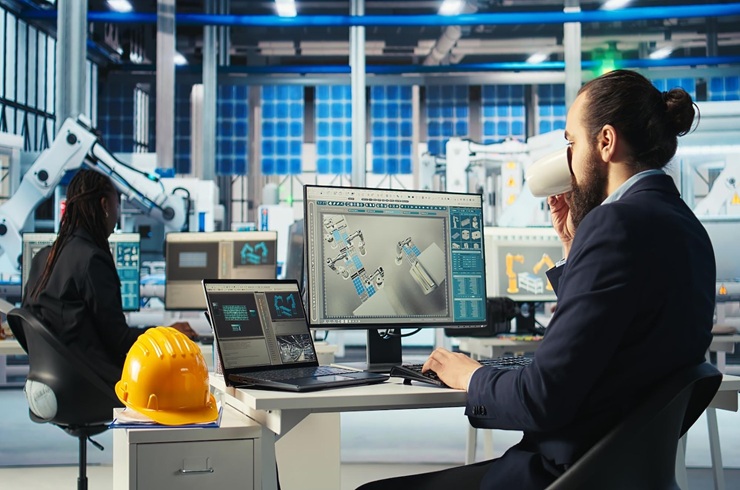
Modern industrial monitoring solutions operate in a fast-paced environment where efficiency, safety, and productivity play an important role in business success. Whether it is a manufacturing plant, processing facility, warehouse, or large industrial unit, businesses need to monitor their operations continuously to maintain smooth performance. Even a small equipment failure or unexpected production delay can lead to significant financial losses.
This is where industrial monitoring solutions become valuable. These solutions help businesses track equipment performance, monitor operating conditions, identify potential issues, and make better operational decisions using real-time data.
With advancements in automation, smart sensors, and Industrial Internet of Things (IIoT) technology, industrial monitoring has become more effective and accessible. Companies can now collect important operational information, identify performance gaps, and address problems before they affect overall production.
In this blog, we will explore what industrial monitoring solutions are, how they work, their major benefits, and why they are becoming an important part of modern industrial operations.
What Are Industrial Monitoring Solutions?
Industrial monitoring solutions are systems and technologies designed to observe, measure, and analyze different industrial processes and equipment conditions. They collect operational data through sensors, monitoring devices, control systems, and connected software platforms.
This information helps operators and facility managers understand how their machines and industrial processes are performing.
For example, a monitoring system installed in a manufacturing facility can track:
- Machine temperature and operating pressure.
- Equipment vibration and performance.
- Energy consumption and power usage.
- Production output and operational efficiency.
- Environmental conditions such as humidity and air quality.
- Equipment downtime and maintenance requirements.
By monitoring these factors, businesses can identify unusual operating conditions and take corrective action at the right time.
The main purpose of industrial monitoring is to improve visibility across industrial operations while reducing unexpected failures, unnecessary expenses, and operational risks.
Why Are Industrial Monitoring Solutions Important?
Industrial operations involve several interconnected machines, processes, and systems. Managing all these activities manually can be challenging, especially in large facilities where equipment operates continuously.
Without proper monitoring, businesses may struggle to identify performance issues until they become serious problems.
Implementing industrial monitoring solutions helps organizations maintain better control over their operations.
Here are some important reasons why these systems matter:
1. Better Equipment Performance
Industrial machines require regular monitoring to maintain consistent performance. Changes in temperature, vibration, pressure, or operating speed can indicate potential equipment problems.
Monitoring systems help identify these changes early, allowing maintenance teams to investigate issues before they lead to major breakdowns.
2. Reduced Equipment Downtime
Unexpected equipment failure can interrupt production schedules and increase operational costs.
With continuous monitoring, businesses can identify warning signs and schedule maintenance activities before equipment stops working.
This helps reduce unplanned downtime and supports uninterrupted production.
3. Improved Workplace Safety
Industrial environments often involve heavy machinery, electrical systems, high temperatures, and other potential hazards.
Monitoring solutions help track important safety parameters and alert employees when operating conditions move outside acceptable limits.
This allows businesses to respond quickly and maintain safer working environments.
4. Improved Operational Visibility
Industrial managers need accurate information to understand what is happening across their facilities.
Real-time dashboards and monitoring reports provide useful insights into equipment conditions, production activities, and energy consumption.
This makes it easier to identify inefficiencies and improve daily operations.
Key Features of Modern Industrial Monitoring Solutions
Modern monitoring systems offer several features that help businesses manage industrial operations more effectively.
Real-Time Data Monitoring
Real-time monitoring allows businesses to access operational information as it is generated. Sensors collect data from connected machines and send it to centralized monitoring platforms.
Operators can view important parameters through dashboards and receive alerts when unusual conditions are detected.
Automated Alerts and Notifications
Automated alerts help maintenance teams respond quickly to equipment abnormalities.
For example, if a machine exceeds its recommended temperature range, the monitoring system can generate an alert so that the responsible team can investigate the issue.
Data Analytics and Reporting
Monitoring systems collect large amounts of operational information. Analytics tools help convert this data into meaningful reports and performance insights.
Businesses can use these reports to identify recurring problems, evaluate equipment efficiency, and plan improvements.
Remote Monitoring Capabilities
Remote monitoring allows authorized employees to access industrial equipment information without being physically present at the facility.
This is particularly useful for businesses managing multiple locations or large industrial installations.
Integration with Existing Systems
Many industrial monitoring platforms can integrate with existing automation systems, PLCs, SCADA platforms, and enterprise software.
This integration helps businesses create a more connected industrial environment.
Applications of Industrial Monitoring Solutions Across Different Industries
Industrial monitoring technology is useful across several sectors. Its applications depend on the type of equipment, operating environment, and monitoring requirements.
Manufacturing Industry
Manufacturing facilities use monitoring systems to track machine performance, production output, equipment temperature, and operating conditions.
These insights help manufacturers reduce production interruptions, improve product quality, and maintain consistent manufacturing processes.
Oil and Gas Industry
Oil and gas operations involve complex equipment and challenging operating environments.
Monitoring systems help track pipeline pressure, temperature, equipment performance, and other important operational parameters.
Early identification of abnormal conditions supports better maintenance planning and operational safety.
Power Generation Industry
Power plants need continuous monitoring to maintain stable and efficient operations.
Industrial monitoring systems help track generator performance, electrical parameters, temperature, and energy production.
This information supports equipment reliability and efficient power generation.
Food and Beverage Industry
Food processing facilities must maintain controlled production and storage conditions.
Monitoring temperature, humidity, equipment performance, and environmental conditions helps businesses maintain product quality and comply with applicable industry requirements.
Water and Wastewater Treatment
Water treatment facilities use monitoring technologies to track water quality parameters, flow rates, pressure, and pump performance.
Continuous monitoring helps operators identify process abnormalities and maintain reliable treatment operations.
How to Choose the Right Industrial Monitoring Solutions
Selecting the right monitoring system is important because every industrial facility has different operational requirements.
Before investing in a solution, businesses should evaluate the following factors:
Understand Your Monitoring Requirements
Start by identifying what needs to be monitored. Some facilities may require equipment condition monitoring, while others may focus on energy consumption, environmental conditions, or production performance.
A clear understanding of these requirements helps narrow down suitable solutions.
Check System Compatibility
The monitoring platform should work with your existing industrial infrastructure.
Check whether it supports the required sensors, communication protocols, automation systems, and software platforms.
Look for Scalability
Industrial requirements can change as businesses expand their operations.
Choose a monitoring solution that can accommodate additional equipment, sensors, and facilities without requiring a complete system replacement.
Consider Data Security
Connected industrial systems can introduce cybersecurity risks if they are not properly protected.
Look for solutions that support secure communication, access controls, regular software updates, and appropriate network protection measures.
Evaluate Technical Support
Reliable technical support is important for maintaining long-term system performance.
Choose a provider that offers installation assistance, maintenance guidance, troubleshooting, and ongoing support.
The Future of Industrial Monitoring Technology
Industrial monitoring continues to evolve as businesses adopt smarter technologies and connected infrastructure.
Artificial intelligence, machine learning, cloud computing, and Industrial Internet of Things technologies are making monitoring systems more intelligent and efficient.
Predictive maintenance is one of the most important developments in this area. Instead of waiting for equipment to fail or following only fixed maintenance schedules, businesses can analyze equipment data to identify potential failures in advance.
Digital twins are also gaining attention. They create virtual representations of physical equipment or industrial processes, allowing businesses to analyze performance and understand possible operational improvements.
In the coming years, industrial monitoring solutions are expected to become increasingly important for businesses looking to improve automation, reduce operational risks, and make data-driven decisions.
Conclusion
Efficient industrial operations depend on accurate information, reliable equipment, and timely decision-making. Businesses that lack proper monitoring may face unnecessary downtime, increased maintenance expenses, and reduced productivity.
Modern industrial monitoring solutions provide the visibility and operational insights needed to manage these challenges. From real-time equipment monitoring and automated alerts to predictive maintenance and performance analytics, these technologies help businesses maintain better control over their facilities.
As industries continue to move toward automation and digital transformation, investing in the right monitoring technology can help organizations improve operational efficiency, strengthen workplace safety, and support long-term business growth.
Frequently Asked Questions (FAQs)
1. What are industrial monitoring solutions?
Industrial monitoring solutions are technologies and systems used to track industrial equipment, processes, and operating conditions. They collect real-time data through sensors and monitoring platforms to help businesses improve performance, identify issues, and maintain operational efficiency.
2. What are the main benefits of industrial monitoring systems?
The main benefits include reduced equipment downtime, improved operational efficiency, better workplace safety, lower maintenance costs, real-time performance visibility, and improved decision-making.
3. How do industrial monitoring solutions reduce equipment downtime?
These solutions continuously monitor equipment conditions such as temperature, vibration, and pressure. When unusual readings are detected, the system generates alerts so maintenance teams can investigate and resolve potential problems before they cause unexpected equipment failure.
4. Which industries can benefit from industrial monitoring solutions?
Manufacturing, oil and gas, power generation, food processing, water treatment, pharmaceuticals, and other industrial sectors can benefit from monitoring technology. Any business that depends on machinery, equipment, or controlled operating conditions can use these solutions.
5. What is the difference between industrial monitoring and predictive maintenance?
Industrial monitoring involves continuously tracking equipment conditions and operational performance. Predictive maintenance uses monitoring data, analytics, and other techniques to estimate when equipment may require maintenance. In simple terms, monitoring provides the information, while predictive maintenance uses that information to anticipate potential failures.